Bin collection changes: Check what bins to put out, and what days to put them out by visiting Near Me.
A Safe Community
Community Safety Starts With You.
We each have an important role to play in keeping our community a safe, vibrant place to live, work and play.
Emergency contacts
| Service | Contact |
|---|---|
| Emergencies | 000 |
| Non-urgent police | 131 444 |
| Crimestoppers (to report suspicious behaviour) report a crime | 1800 333 000 |
| SmartWatch - the City's vehicle-based CCTV surveillance available daily from 12pm–4am | 1300 657 123 |
Home safety and security
- Home safety tips
- Safety Subsidy and Home Cooling Subsidy schemes
- UV pens
- Crime prevention through environmental design
- Keep doors, windows and garage doors locked even when home
- leave spare keys with people, not hidden around your home
- cut back shrubbery around the house to ensure natural surveillance
- make sure your door can be seen clearly from the road
- keep your home surrounds well lit at night
- keep garden sheds, garages and side gates locked and tools away
- keep your post and meter boxes locked
- install home alarms
- property marking
- keep money, handbags and keys out of view
- never give personal details over the phone
- fit a door viewer.
For more information on how to reduce opportunities for crime around your home, please refer to the Crime Prevention Through Environmental Design Checklist below.
We have four schemes to help residents on low-income pensioner or concession cards feel safer, more secure and connected in their homes, including a Safety Subsidy and Home Cooling Subsidy. For further information please visit subsidy scheme.
The City has a limited number of UV pens in stock to enable residents to identify their own property without engraving names onto valuable items.
UV Pens are an effective way to mark your property without reducing the value of the item. UV pen ink is only visible under an ultraviolet light. Marking your property makes ownership easier to determine by police and aids the return of property to its rightful owner.
See the Property Marking Instructions below for the guidelines to mark your property effectively.
Residents can obtain a free UV pen by contacting the City's Community Safety and Support Services Team on 9528 0333 or email customer@rockingham.wa.gov.au.
Crime prevention through environmental design (CPTED) is a crime prevention method to reduce opportunities for crime. You can keep your home environment safe by following some simple principles:
- keep your yard maintained to reduce places to hide
- increase visability from the street
- cut back shrubbery around the house to ensure natural surveillance
- keep the area around your home well lit at night.
CCTV

Will any City-owned CCTV be used for surveillance on private property?
No. The intention of cameras is to record publicly accessible areas and the activities that take place in those areas.
Where can I get further information about the City of Rockingham’s mobile CCTV units?
Contact the City of Rockingham on 9528 0333 or customer@rockingham.wa.gov.au.
What should I do if I’m concerned about my neighbours' CCTV or drone recording my property?
There are no City of Rockingham policies or by-laws related to CCTV on private property. Please visit the Office of the Australian Information Commissioner for information on laws regarding surveillance and monitoring. If you are concerned that CCTV is breaching the Surveillance Devices Act and/or Australian Privacy Principles, you should contact your local police station for them to investigate further.
Contact details for your local police station can be found on the WA Police website by clicking ‘your local police’ in the right hand menu. Enter your suburb into the search menu and this will bring up the contact details of your local police.
Visit the Australian Government Civil Aviation Safety Authority (CASA) for information on flying drones safely and how to report unsafe flying.
What will the images recorded by the City’s mobile CCTV units be used for?
The City will provide authorised agencies such as WA Police with recorded surveillance images from public areas.
Can members of the public obtain copies of recorded images from the City’s mobile CCTV units?
The City encourages residents to contact WA Police and have them request the footage on their behalf. Otherwise residents can submit a completed Freedom of information form.
Cam-Map WA is a comprehensive database of all voluntarily registered CCTV systems across Western Australia. This publicly accessed platform allows owners and operators of CCTV systems to self-register onto a secure database operated by the WA Police. Accurate knowledge of the locations of CCTV systems will assist WA Police to investigate incidents in order to improve community safety.
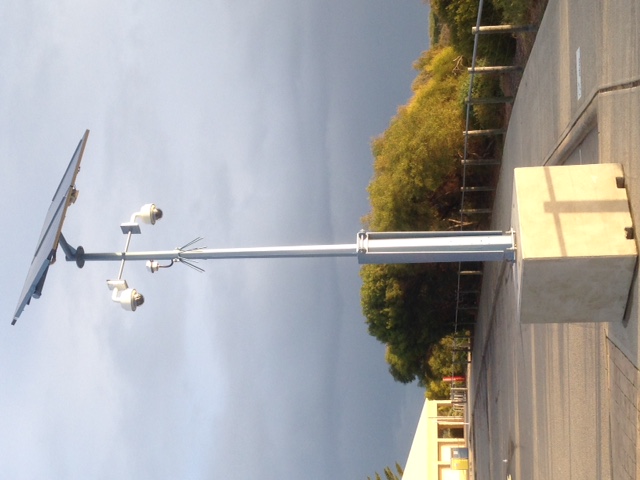
The City of Rockingham has five mobile CCTV units which are deployed in areas of need to assist WA Police by gathering evidence. You can let us know of any areas you would like to be considered on the deployment schedule for the units. All of the locations are proposed to local police. Police advise us if the locations are hotspots and if a CCTV unit should be put at that location.
Follow these simple steps if you would like a particular location to be considered for one of the mobile CCTV units:
- Report all incidents at that location to police on 131 444 – remember police help determine locations based on their database so if there is an issue in a particular location then police should know about it.
- Contact the City’s SmartWatch service on 9528 0333 or from 12pm-4am, seven days a week on 1300 657 123.
Personal safety
When you are out and about consider some of these simple steps to help you stay safe:
- look up, stay alert and be aware of your surroundings
- turn down the volume on your earphones
- walk in well-lit, busy areas
- walk with a friend or group wherever possible
- if you regularly walk by yourself, consider varying your route
- have someone accompany you to your car
- plan ahead - how are you going to get home?
- tell your family, friends and colleagues your whereabouts and when you expect to return. If your plans change, let them know.

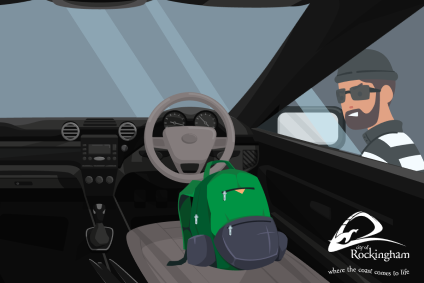
Don’t leave any valuables in your vehicle, whether you’re at the beach, shopping or visiting friends.
Always lock your vehicle and take your valuables and your keys with you. If you’re heading to the beach, only take what you need and leave any other valuables at home. Don’t hide your keys on or under any vehicle parts. Thieves know where to look.
Any items on the back seat are temptations for someone to smash and grab. Thieves go window shopping too.
Consider the following vehicle security tips:
- Take all valuables with you, including wallets, bags, sunglasses, mobile phones etc.
- Lock your vehicle and keep your keys in a safe place out of sight, even when at home.
- Fit ant-theft screws to your registration plates. These can be purchased from hardware stores and cost a lot less than replacing your licence plate.
- Park your vehicle in well-lit or visible area, near other cars. Choose well-lit areas when parking at night.
- Where possible, fit an anti-theft device such as immobiliser, wheel lock or alarm.
- Don’t store any personal mail or documents with your name and address inside your vehicle.
- Remove and store plates on long-term parked vehicles, e.g. caravans and trailers.
Safe & Found WA is an initiative introduced by the WA Police and the Australia Medic Alert Foundation. Safe & Found supports local residents living with dementia, autism or cognitive impairment who may be at risk of getting lost or reported as missing.
Community members complete a profile outlining personal history and characteristics including a recent photo, which is added to the Safe & Found database. This ensures police have immediate access to critical information if they need to undertake a search operation.
Membership includes the purchase of a Safe & Found identification (ID) bracelet, profile set up and first year's membership at a cost of $99.
Visit the Safe & Found website for any further information regarding the details and purchase of the package.
A Safety Subsidy Scheme application may be submitted to the City by eligible residents to cover the cost of the initial subscription ($99). The ongoing annual fee of $49 is not eligible for a claim under our Safety Subsidy Scheme guidelines.
For further information, please visit Low income subsidy scheme.
Beach and water safety
The City of Rockingham is home to 37 kilometres of stunning coastline, including some of Perth's best beaches. When heading to the beach, remember to ensure your visit is a safe one.
Beach safety tips
- Always swim between the red and yellow flags on patrolled beaches
- look for signs at the entrance to the beach for local information
- never swim alone, or at night
- never swim under the influence of alcohol or after a big meal
- if you get into trouble, conserve your energy by floating on your back and staying calm. This will ensure you have the energy to remain afloat until assistance arrives.
If you find yourself in a rip current, follow these steps:
- Do not panic
- raise an arm and call out for help, you may be rescued
- float with the current, it may return you to a shallow sandbank
- .swim parallel to the beach or towards the breaking waves until you escape the rip current.

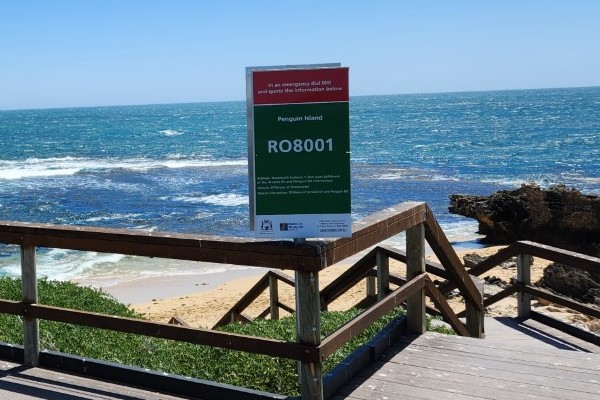
The Beach Emergency Numbers (BEN) system – named in honour of fatal shark bite victim Ben Gerring – is a coding system that aims to improve emergency response times by installing signs with unique codes at public beach access points.
In the event of an emergency, the BEN signs are designed to help decrease the response time by pinpointing strategic locations for responders. Callers should quote the BEN sign number and any extra location details displayed on the map.
The signs form part of the State's emergency signage network which spans from Geraldton to Esperance. In the Rockingham mainland area, 67 signs have been installed, plus 14 on Garden Island.
An up-to-date interactive map of BEN signs and other useful functions can be found on the Sharksmart shark activity page (use the drop down menu on the left and select the BEN icon). Alternatively, a printable map of all local government authority signs is available on the Sharksmart website.
Shark sightings
View the latest reported sightings and tagged shark detections before you hit the beach.
Help keep everyone safe. Report shark sightings to Water Police on 9442 8600.
Drowning can occur in a number of settings such as the home, beaches, public and private swimming pools. There is a risk of drowning when people undertake a broad range of water-based activities including swimming, diving, fishing and boating.
During the financial year 1 July 2022 to 30 June 2023, 281 people drowned in Australian waterways.
Drowning accidents are largely due to inattention, ignorance or lack of skill, and are preventable.
How to prevent drowning
To prevent drowning, you can:
- Enrol in swimming lessons. Learning how to swim reduces the risk of drowning. The City provides opportunities for babies through to adults to learn how to swim. Courses are available at the Rockingham Aquatic Centre and the Aqua Jetty.
- Actively supervise children. Active supervision is defined as constantly watching and have a clear view of a child or children.
- Check pool fences and gates. Owners and occupiers are responsible for ensuring that any fence or barrier restricting access to a swimming or spa pool is maintained and operating effectively. If you do not comply with the regulations you risk the lives of young children and may face substantial fines. To find out more visit rules for pools and spas.
- Avoid alcohol and drugs around water. Alcohol and drug consumption can significantly increase the risk of drowning. Alcohol-related drowning deaths occur across all ages and environments, among men and women, in urban and regional areas.
- Wear a life jacket. To find out more about lifejackets visit Lifejackets Safety Equipment.
- Know the conditions. To find out more visit the Bureau of Meteorology for suggested checks before heading out on the water.
- Learn first aid and CPR.
For further information visit: